Roskilde Festival 2026 Guide
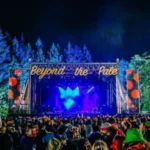
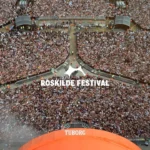
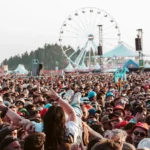
Roskilde Festival is not merely a music event; it is a large-scale cultural ecosystem built around live performances, temporary community living, creative expression, shared values, and a distinctly Scandinavian approach to collective experience. For many attendees, the festival is as much about social architecture as it is about stage programming. People come for the concerts, certainly, but they stay for the atmosphere: the campsite culture, the food network, the volunteer energy, the art installations, the environmental focus, and the sense that they are participating in something broader than a conventional ticketed show.
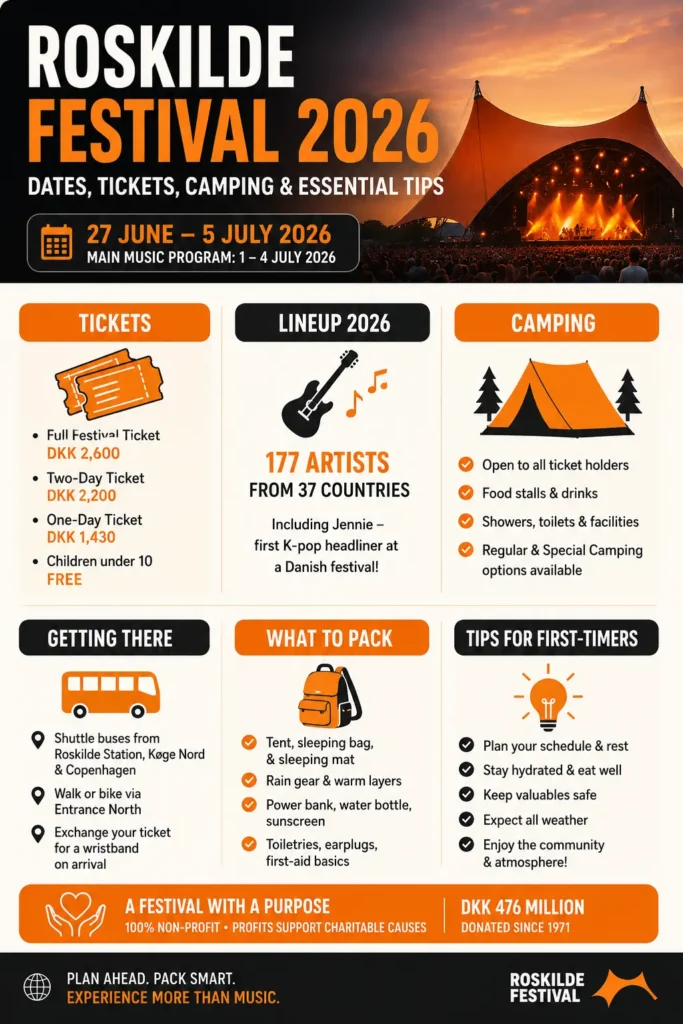
Roskilde Festival 2026 will take place from Saturday 27 June to Sunday 5 July 2026, while the principal music program runs from Wednesday 1 July to Saturday 4 July. That distinction matters because Roskilde is structured as a multi-day immersive experience rather than a simple weekend of concerts. The camping area remains open across the entire festival period, and the official full festival ticket covers the complete stay. The festival is also non-profit, and the proceeds support charitable causes.
This guide is designed as a practical, search-intent-aware resource for anyone planning Roskilde Festival 2026. It goes beyond generic event information and addresses the questions people actually ask: dates, tickets, camping, transportation, on-site logistics, packing, safety, food, sustainability, and first-time visitor advice. The goal is not just to describe the festival, but to help readers model the experience, reduce uncertainty, and make better decisions.
What Is Roskilde Festival?
Roskilde Festival is one of Europe’s most influential music and culture festivals, held in Denmark and recognized for its scale, breadth, and identity. It is known for major international headliners, emerging talent, genre diversity, public art, food culture, campsite life, and a strong civic mission. The festival is organized by the Roskilde Festival Charity Society and powered by a large volunteer workforce. In mission terms, Roskilde is not trying to function like a standard commercial festival. It is intended to create cultural value, social value, and long-term charitable value.
That non-commercial identity is central to how the festival is experienced. Roskilde Festival is 100% non-profit, and the official materials state that profits are donated to humanitarian and cultural work. The festival also says that it has generated DKK 476 million for distribution since 1971. Those facts are more than branding language. They shape the emotional tone of the event. Attendees often feel that they are not only consuming entertainment, but also contributing to a wider civic model.
For many visitors, that matters a great deal. It changes the festival from a simple product into a participatory environment. People are not just there to hear songs. They are there to inhabit a temporary city of music, food, movement, spontaneity, and values.
Why Roskilde Festival matters more than a standard music event
Roskilde has a wider semantic footprint than a typical concert weekend. It includes not only the main stage experience, but also camping, food access, social behavior, sustainability practices, art, and community logic. That makes it especially attractive for visitors who want more than a lineup poster.
Roskilde is a compelling choice if you want:
- a broad international lineup
- camping as part of the core experience
- visible social and sustainability values
- ticket options for different trip lengths
- a format that works for both first-time guests and seasoned festival-goers
Roskilde Festival 2026 at a Glance
Here is the quick-reference snapshot readers usually want first.
| Topic | 2026 Information |
| Festival dates | 27 June – 5 July 2026 |
| Main music program | 1 July – 4 July 2026 |
| Full festival ticket | DKK 2,600 including fee |
| Children 10–14 | DKK 1,315 including fee |
| Children under 10 | Free access |
| Two-day tickets | DKK 2,200 including fee |
| One-day tickets | DKK 1,430 including fee |
| Camping area | Open to festival participants, including one-day and two-day ticket holders |
| Festival type | Non-profit |
| 2026 lineup | 177 artists from 37 countries |
According to the official festival site, the 2026 lineup is complete and features 177 artists from 37 countries. The program also includes Jennie, who represents a historic first as a K-pop artist headlining a Danish festival. That makes Roskilde 2026 especially notable in terms of diversity, international scale, and cultural visibility.
Roskilde Festival 2026 Dates and Schedule
One of the most important planning distinctions is the difference between the full festival window and the core music program. The full festival ticket grants access from Saturday 27 June to Sunday 5 July, which covers the camping experience as well as the broader festival period. The main music program runs from 1 July to 4 July.
This matters because many first-time visitors assume the festival begins and ends with the headline days. In reality, Roskilde is designed as a layered timeline. The earlier days are part of the festival architecture: they allow people to arrive, claim space, build camp, acclimatize, and settle into the rhythm before the largest performances begin.
Why the date split matters
When deciding whether to buy a full festival ticket or a shorter pass, the key question is not only “How many concerts do I want to see?” It is also “How much of the full lived experience do I want?”
Ask yourself:
- Do I want the full camping and social environment?
- Do I want time to arrive early and organize before the biggest crowds?
- Do I care about the broader mix of artists, stages, and site activities?
If the answer is yes to most of those questions, the full ticket is generally the more coherent option.
How to interpret the schedule correctly
Festival scheduling is not just about set times. It is about energy management, mobility, and pacing. A good Roskilde plan helps you anticipate:
- when to arrive
- When to rest
- Which performances are worth crossing the site for
- When to eat
- When to hydrate
- When your campsite will become most active
In practical terms, Roskilde rewards strategic planning. The smartest visitors do not merely track shows. They map the day as a sequence of physical and social decisions. That is why schedule literacy matters as much as lineup literacy.
Tickets and Pricing
Ticketing is one of the highest-value search topics around Roskilde Festival 2026 because people usually want a Precise price and a clear understanding of the available options before they commit.
The official ticket types include:
| Ticket Type | Price |
| Standard Full Festival Ticket | DKK 2,600 including fee |
| Smart Ticket | DKK 514 / 5 months + fee |
| Disabled With Companion | DKK 2,600 including fee |
| Making A Bigger Change Ticket | DKK 2,800 including fee |
| Children 10–14 | DKK 1,315 including fee |
| Two-day ticket | DKK 2,200 including fee |
| One-day ticket | DKK 1,430 including fee |
Children under 10 have free access.
Which ticket should you choose?
A full festival ticket is the most complete option if you want the classic Roskilde experience: the campsite, the extended timeline, the full social texture, and access across the main festival days. A two-day ticket is suited to visitors who want a shorter but still immersive music-focused visit. A one-day ticket is best for highly targeted attendance, such as a specific headliner or a narrow slice of the schedule.
The official FAQ also states that one-day and two-day tickets are valid from 9:00 until 9:00 the next day. That detail is crucial because it affects how you plan your arrival, your movement, and your overnight strategy.
What the ticket structure means in real-life terms
Ticket types influence behavior. They shape not only how long people stay, but also how they use the campsite, the food system, the transport network, and the evening program.
- A full ticket is for visitors who want the complete ecosystem.
- A one-day ticket is for targeted attendance and minimal commitment.
- A two-day ticket is for a short stay with enough room to absorb the festival atmosphere.
- A donation-based ticket is for attendees who want to add direct support to the festival’s mission.
This distinction matters for readers because the ticket is not just an entry token. It is a model of participation.
Ticket resale and transfers
The official FAQ says resale is managed through the Tickster resale platform, and that wristbands cannot simply be handed around after exchange. Tickets may be resold up until 24 hours before the festival begins, but once a wristband has been issued, it is personal and non-transferable in ordinary circumstances.
This is a small detail that can prevent major confusion. People often search for resale information late in the process, and many mistakes happen because users assume a ticket and a wristband are the same thing. They are not. That distinction should be visible in any high-quality guide.
Lineup and Stages
The Roskilde Festival 2026 lineup is complete, according to the official site. The final announcement identifies 177 artists from 37 countries, which reinforces the festival’s global reach and genre diversity. The page also highlights Jennie, whose appearance marks the first K-pop headlining moment at a Danish festival.
That said, a useful lineup section should not behave like a static roster dump. It should explain how readers should think about the lineup.
How to read the lineup strategically
Roskilde is not built around a single star. Its value comes from range and sequencing. The lineup is usually strongest when understood as a multilayered discovery environment:
- major international names
- underground and emerging artists
- genre-spanning acts
- daytime and nighttime contrasts
- multiple energy levels across the week
In other words, the festival is not only about who is playing. It is about how the acts fit together across time, space, and audience mood.
Build your own mini-program
A good festival strategy is to create a personalized itinerary before arrival. Start with the must-see acts, then add adjacent options in case of conflict or fatigue. That way, you can adapt without feeling lost.
A useful structure might look like this:
- one major headline performance
- One Discovery Act
- one quieter afternoon set
- one late-night session with your group
This kind of sequencing reduces cognitive overload. Instead of treating the schedule as a chaotic feed, you treat it as an intentional experience map.
Stage planning advice
Try to organize your day by either geography or energy.
For example:
- group nearby stages to reduce walking
- pair intense performances with recovery time
- balance loud, crowded sets with lighter daytime listening
- Leave buffer time between must-see shows.
That approach makes the festival feel more navigable and less fragmented. It also lowers the risk of missing key moments because of poor pacing.
What to expect from the program
Roskilde’s programming logic usually includes:
- big international headliners
- indie and alternative acts
- electronic music
- hip-hop and pop
- experimental and cross-genre programming
This variety is one of the reasons the festival retains such broad appeal. It works both as a discovery engine and as a destination for major-name performances.
Camping and Accommodation
Camping is not a side feature at Roskilde. It is one of the core pillars of the festival experience. In experiential terms, the campsite is part of the product, part of the community, and part of the memory structure.
The official camping area is open from Saturday, 27 June to Sunday, 5 July and is available to all participants, including people with valid one-day and two-day tickets.
The campsite includes:
- food stalls
- places to buy drinks
- shopping for camping gear and essentials
- cloakrooms
- toilets
- hot showers and free cold showers
- quieter areas for rest
This is important because many visitors search for camping after they have already purchased a ticket. At that point, they are usually trying to answer highly practical questions: Where do I sleep? Do I need to book? What does campsite life actually look like? How much control do I have over my placement?
Regular Camping
Regular Camping is the most flexible option. There is no pre-booking. You arrive, search for an available space, and set up your tent.
This works well if:
- You want the classic festival experience
- You are comfortable with uncertainty
- You do not need a reserved area
- You are okay with arrival-based allocation
The downside is that the system is less controlled. Space is limited, and arrival timing can affect whether your group stays together. If you arrive late, the available terrain may be less convenient or more dispersed.
Special Camping
Special Camping is designed for people who want more structure, more comfort, or more control. The official Special Camping page includes options such as:
- reserved spots
- quiet zones
- pre-pitched tents
- glamping-style arrangements
One example is Get A Place, which reserves a 50 m² area for a camp of 6–10 people, or about four tents and one pavilion. The official price shown on the page is DKK 1,450 per area.
Why camping matters for search intent
Readers do not merely want to know that camping exists. They want actionable detail. They are searching for answers to questions like:
- Is camping pre-booked or first-come, first-served?
- Are there quiet areas?
- How large is the space?
- Are there reserved options?
- What facilities are on site?
- How does camping shape the overall festival experience?
A strong guide should answer those questions directly, because camping is one of the main determinants of trip quality.
Camping rules that matter
The official FAQ says certain items and behaviors are restricted, including open fire and glass packaging in the camping area. It also notes that pavilions, sound systems, and campsite behavior are regulated. These rules are not only about compliance; they are also about logistics and comfort.
If visitors know the rules in advance, they can pack more efficiently and avoid unnecessary friction on arrival. That is a major value-add for first-time attendees.
Simple camping advice
If this is your first Roskilde, keep the advice practical:
- Arrive early if you want more camping choices
- Bring a reliable, simple gear
- keep valuables accessible
- pack for weather swings
- expect long walks, crowd density, and shared facilities
Camping at Roskilde can be one of the best parts of the festival, but it requires preparation. A well-organized camp tends to improve the entire week.
Getting Around On-Site
Many festival guides overfocus on music and underexplain logistics. Yet for most visitors, the most stressful moments are not the concerts. They are the moments of arrival, wristband exchange, route-finding, and campsite navigation.
When you arrive, you need to know where to enter, where to exchange your ticket, how to reach your camp, and how to move around without wasting energy.
Arrival and wristband exchange
The official arrival guide says that if you are staying in Camping West, you should use Entrance West or Entrance North. It also says that you should go to the Wristband Exchange to convert your festival ticket into a wristband. According to the guide, the Entrance West wristband exchange closes at 22:00, and later arrivals should use the check-in point north of Entrance North.
This detail is highly useful because arrival flow is one of the most common pain points at large festivals. People often assume they can arrive casually and figure everything out on the spot. In practice, that can create delays and stress.
Getting in by bus
The FAQ says there are official shuttle buses between the festival and places such as:
- Roskilde Station
- Køge Nord
- Copenhagen
- Entrance East and Entrance West
Some routes operate based on demand and may depart when full rather than on rigid fixed intervals. The official FAQ also provides pricing for certain shuttle routes, so travelers should check the latest details before departure.
Getting in on foot or by bike
If you are walking from Roskilde, the FAQ says Entrance North is the easiest route. Bicycle parking is also available near the festival site, which makes cycling an efficient option for visitors staying nearby.
Why this section matters
People search for very specific logistics phrases:
- How to get to Roskilde Festival
- where to exchange wristbands
- Which entrance to use
- How to arrive by bus
- How to avoid long queues
A high-value guide does not bury those details. It makes them easy to scan and easy to act on.
On-site movement tips
A few basic habits can save a lot of trouble:
- Save your entrance and arrival details before you travel
- know your campsite zone in advance
- Choose a meeting point with your group
- screenshot the schedule
- Avoid waiting until you are exhausted to solve wayfinding problems
Festival energy is finite. The less effort you spend on navigation, the more you have for the actual experience.
What to Pack for Roskilde Festival 2026
Packing is one of the most searched festival topics because people are trying to avoid discomfort, waste, and unnecessary expenses. They want a checklist that reduces regret.
Core packing list
Bring:
- tent
- sleeping bag
- sleeping mat or air mattress
- rain gear
- warm layers
- comfortable shoes
- power bank
- reusable water bottle
- sunscreen
- toiletries
- earplugs
- small first-aid items
- basic food and snacks
Smart packing guidance
Do not overpack with items that are difficult to carry across a large site. Mobility matters. Roskilde is not a parking-lot festival where everything is next to the gate. You will walk, wait, carry, and shift locations repeatedly.
A useful rule is to favor durability over novelty. A practical bag setup generally beats an elegant but fragile one.
What not to bring casually
The campsite FAQ indicates that some items are not allowed and that glass is not accepted in the camping area. This means packaging decisions matter. Bottles, containers, and breakable materials should be selected with those restrictions in mind.
A good first-time bag structure
A simple and effective setup might include:
- one day bag
- one sealed camping essentials bag
- one smaller tech/document bag
- One extra dry layer for rain or colder nights
The best festival systems are usually the simplest. At Roskilde, simplicity is not minimalism for its own sake; it is operational efficiency.
Food, Sustainability, and On-Site Life
Food is a major part of the Roskilde experience, and on-site eating is closely connected to endurance. The campsite and festival grounds are designed to support long stretches of activity, movement, and social interaction.
The official campsite page notes that food stalls and places to buy drinks are available across the site. That makes it easier to remain on location for extended periods without needing to leave for every meal.
Food planning advice
A balanced food strategy usually includes three layers:
- Bring some basic snacks
- Purchase meals on site when needed
- Keep drinks and water available in camp
This combination creates flexibility. You are not trapped in a single consumption pattern, and you avoid unnecessary hunger spikes.
Sustainability and mission
Roskilde Festival is widely associated with sustainability and social purpose. The official material emphasizes that the festival is non-profit and that profits are donated to charitable work. That mission is part of the festival’s identity and part of why many attendees choose it over a purely commercial alternative.
Why this matters in a guide
Readers are not only looking for entertainment value. They want to know whether the festival aligns with their values, feels responsibly organized, and justifies the investment of time and money.
A useful guide should therefore frame the festival in plain terms:
- Roskilde is a festival with a purpose.
- It supports charitable causes.
- It is designed as a full multi-day ecosystem.
- Food and camping are central, not peripheral.
That framing increases both clarity and trust.
Safety and First-Time Tips
This section is especially valuable for new attendees because large festivals are not difficult in one dramatic way. They are difficult in many small ways that accumulate.
Safety basics
The most common risks are practical rather than extreme:
- dehydration
- insufficient sleep
- lost phones or wallets
- confusing meeting points
- poor footwear
- carrying too much
First-time advice
If this is your first Roskilde, think in terms of energy management rather than conquest.
- Do not try to do everything.
- Choose your priority artists.
- Build recovery time into the day.
- Stay near your group early in the trip.
- Keep your phone charged.
- Drink water before you feel depleted.
Heat, rain, and nighttime conditions
The weather can change quickly. A bright afternoon may become a cold, damp night. That is one of the most important realities to plan for. It is better to pack for variability than to assume stable conditions.
Crowd management tip
When a huge performance ends, movement across the site can become congested very quickly. If possible, leave a little earlier or a little later than the peak crowd flow. That small adjustment can reduce friction and improve the end-of-night experience.
Why Roskilde Festival 2026 Is Worth the Trip
There are many music festivals in Europe, but Roskilde holds a distinctive position because it combines breadth, purpose, and atmosphere in a way that feels unusually coherent.
A few reasons it stands out:
- The lineup is broad and international
- The campsite is part of the central experience
- The festival has a strong identity and social mission
- The ticket structure supports different budgets and trip lengths
- The entire event feels like a temporary summer city rather than a simple performance venue
Roskilde Festival 2026 is also notable because the lineup is complete and the programming crosses genres, countries, and audience segments. For many visitors, the main challenge is not deciding whether the festival is good. It is deciding how to participate in it intelligently.
That is why planning matters so much. The better your logistics, the more bandwidth you have for the music, the community, and the atmosphere.
FAQs
Roskilde Festival 2026 runs from Saturday 27 June to Sunday 5 July 2026. The main music program runs from 1 July to 4 July 2026.
The official price for a Standard Full Festival Ticket is DKK 2,600, including fee. Other ticket types, including one-day and two-day tickets, have different prices.
Children under 10 have free access. The official FAQ also lists a ticket type for children aged 10–14.
Yes. Roskilde Festival is non-profit, and the official site says the profits go to charitable causes.
The official camping area is open to participants with valid one-day and two-day tickets, but those tickets are only valid within their stated time windows.
Conclusion
This article performs best when every section answers one clear user question immediately and then expands with targeted detail. That creates a readable structure, preserves topical relevance, strengthens search intent matching, and improves the overall usefulness of the page.
It also helps the content behave like a semantically rich document: one that covers the full entity set around Roskilde Festival 2026, including dates, pricing, camping, lineup, arrival, packing, safety, sustainability, and first-time planning.